


როგორ გიხდის დივიდენდს კონტრაქტი, რომელიც არასდროს იწურებაHow a contract that never expires pays you a dividend
პერპეტუალური ფიუჩერსები (პერპები) კრიპტოში გაჩნდა, სადაც დივიდენდს არაფერი იხდის. ახლა ბირჟები პერპებს აქციებსა და აქციების ინდექსებზეც უშვებენ, და ჩნდება მარტივი კითხვა: როცა აქცია ფულს იხდის, ვის ერგება? პერპი არასდროს იწურება, ამიტომ არ აქვს თარიღი, რომელშიც ამ გადახდას ფასში ჩადებ. ამ დოსიეში ერთ პასუხს ნაბიჯ-ნაბიჯ განვიხილავ, ერთი გამოგონილი მაგალითით.
ძველი პასუხი: ფორვარდმა უკვე იცის
ვადიანი ფორვარდი ან ფიუჩერსი აქციაზე ფასდება აქციის ფასით, საპროცენტო განაკვეთით და იმ დივიდენდებით, რომლებიც ვადის გასვლამდე გადაიხდება. სახელმძღვანელოს ფორმულით, სადაც S არის სპოტ ფასი, r საპროცენტო განაკვეთი, q დივიდენდის შემოსავლიანობა და T ვადის გასვლამდე დრო:
F = S · e^((r − q) · T)
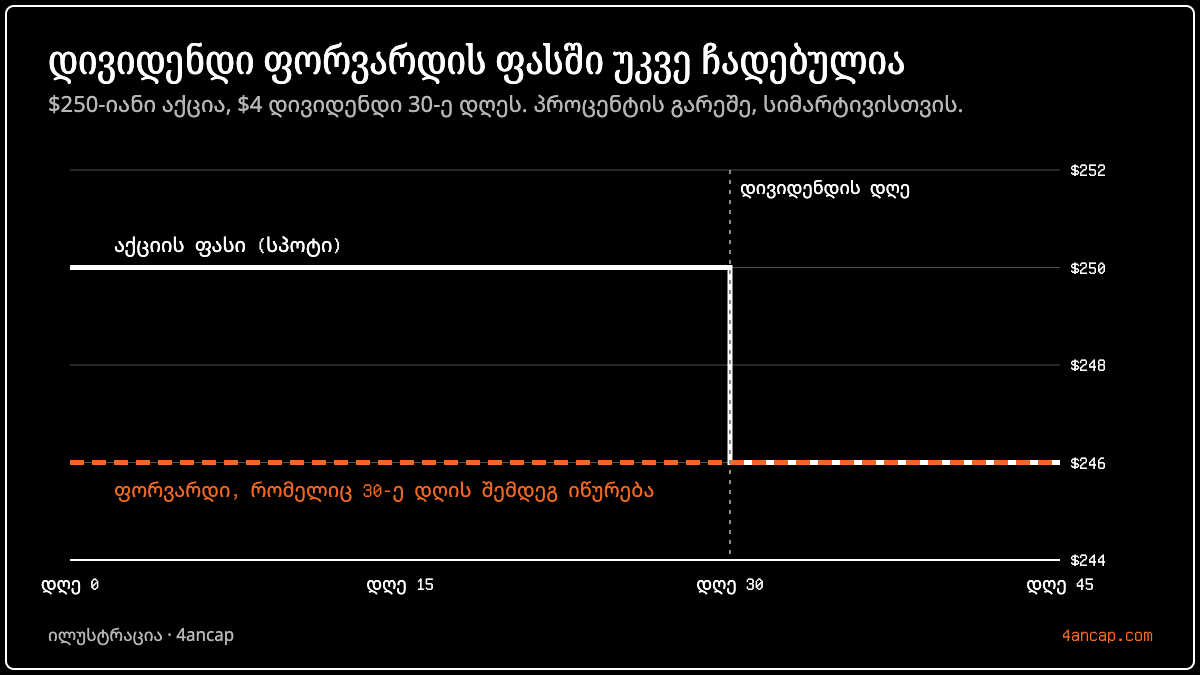
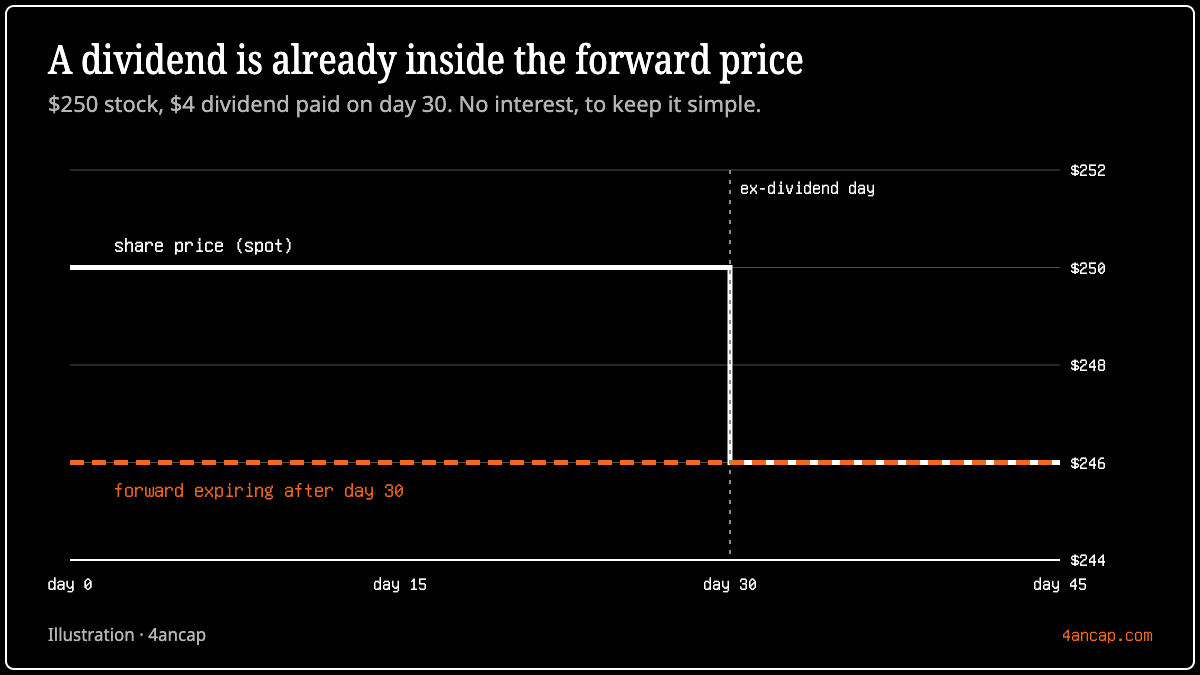
ავიღოთ $250-იანი აქცია, რომელიც 30-ე დღეს $4 დივიდენდს იხდის, და პროცენტი უგულებელვყოთ. 30-ე დღეს აქცია დაახლოებით $4-ით ეცემა. ფორვარდისთვის, რომელიც 30-ე დღის შემდეგ იწურება, ეს ვარდნა სიურპრიზი არ არის: ის თავიდანვე $246-ის ახლოს ვაჭრობს. ამიტომაა, რომ დივიდენდამდე პუტის ყიდვა უფასო ფული არ არის. ვარდნა ფასში უკვე ჩადებულია.
პერპს ვადა არ აქვს, ამიტომ ფანდინგს იყენებს
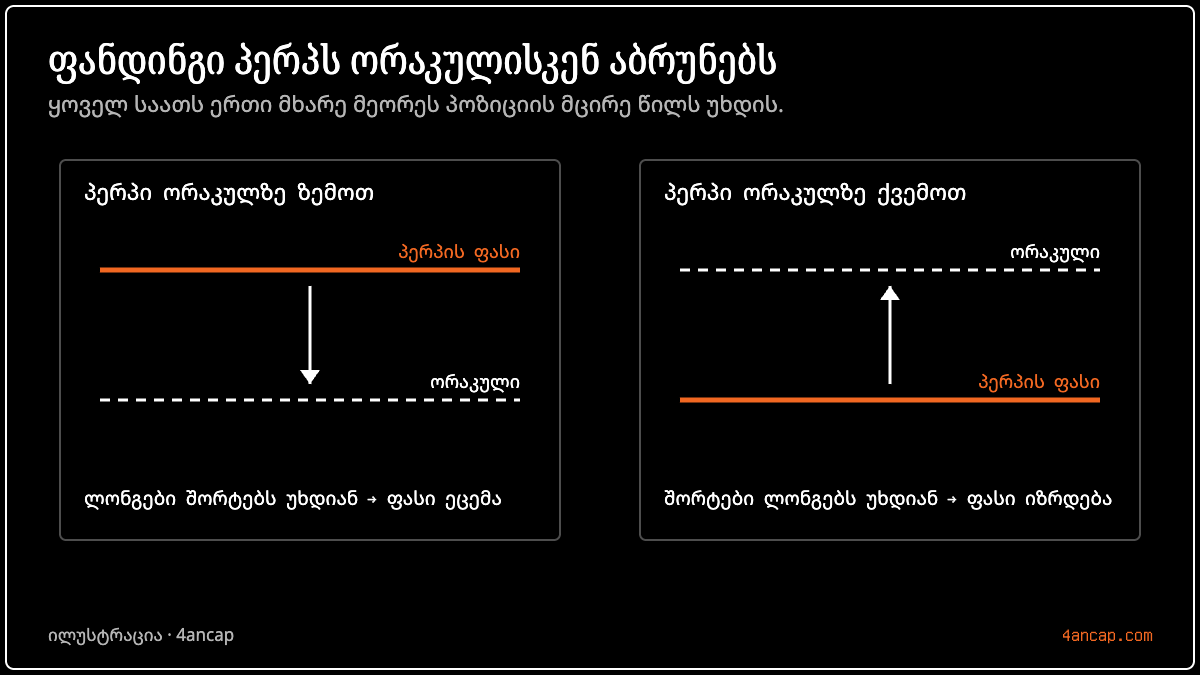
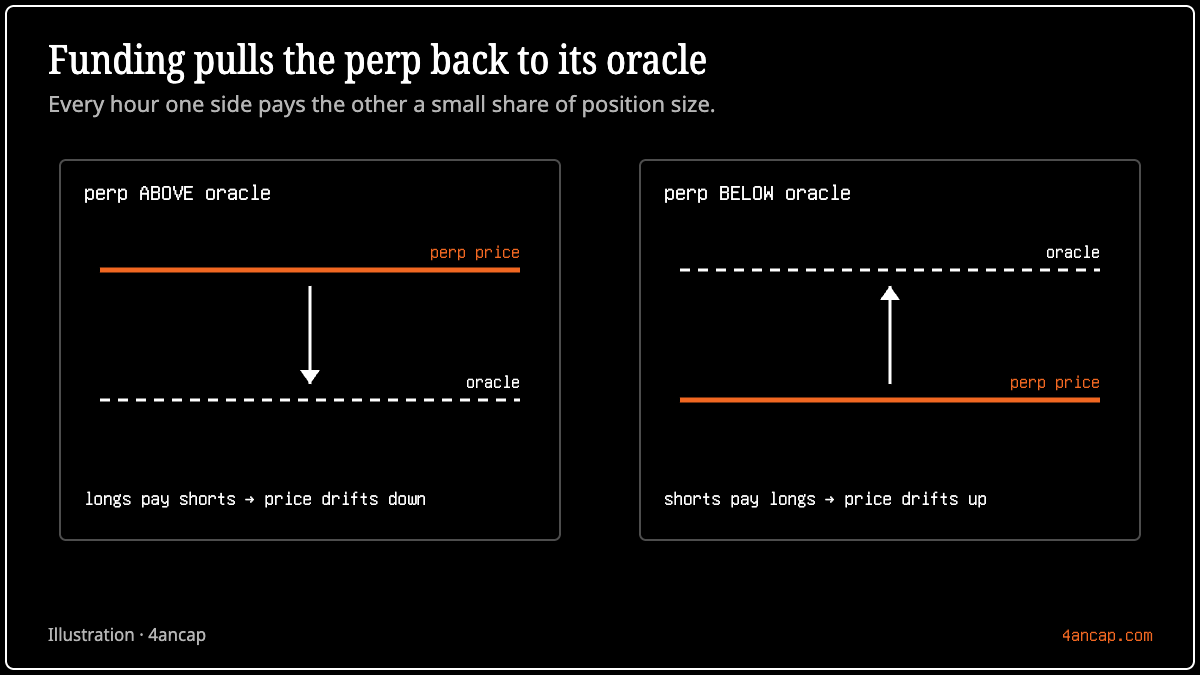
პერპი ე.წ. ორაკულის ფასთან ახლოს ფანდინგის დახმარებით რჩება. ყოველ საათს, თუ პერპი ორაკულზე ძვირად ვაჭრობს, ლონგები შორტებს თავისი პოზიციის მცირე წილს უხდიან; თუ იაფად, შორტები უხდიან ლონგებს. ეს გადახდა ძვირ მხარეს ნაკლებად მიმზიდველს ხდის და ფასს უკან აბრუნებს.
სად იმალება დივიდენდი აქციის პერპში
კრიპტო პერპებისთვის ორაკული უბრალოდ სპოტ ინდექსია. აქციების პერპებისთვის trade.xyz-ის სპეციფიკაცია ორაკულს უახლოესი კვარტალური ფიუჩერსიდან აგებს და მისგან სპოტის მსგავს ფასს გამოთვლის:
ორაკული = F · e^(−(r − q) · T)
კვარტალური ფიუჩერსი მხოლოდ იმ დივიდენდებს შეიცავს, რომლებიც მისი ვადის გასვლამდე გადაიხდება. როცა ორაკული შემდეგ კვარტალურ კონტრაქტზე გადადის (ამას „როლი“ ჰქვია), ახალ ფანჯარაში მოხვედრილი დივიდენდი მასში მყისიერად შედის და ორაკული საფეხურით ეცემა. ჩვენს მაგალითში ორაკული $250-ზეა და როლზე $246-მდე ეცემა.
როლიდან უკან, საათობრივად
თუ როლამდე ერთი საათით ადრე პერპი ისევ $250-ად ვაჭრობდა, შორტი მომდევნო საათში თითქმის გარანტირებულ $4-ს გამოიმუშავებდა. ტრეიდერები მას წინასწარ გაყიდიან. მაშ, რა არის სამართლიანი ფასი როლამდე ყოველ საათს?
ვთქვათ, ფანდინგის წესი Hyperliquid-ისა და trade.xyz-ის სტილშია: საათობრივი განაკვეთი უდრის პრემიას p = (პერპი − ორაკული) / ორაკული, პლუს (0.01% − p), შეზღუდული ±0.05%-ით. კაპიტალის ღირებულება უგულებელვყოთ. ლონგი, რომელიც პოზიციას ერთი საათით ინახავს, ნულზე უნდა გავიდეს: ფასის ცვლილებას პლუს მიღებულ ფანდინგს ნული უნდა მოჰყვეს. თუ ამ საათის პრემიას y-ს დავარქმევთ, ხოლო ერთი საათის შემდეგ მოსალოდნელ პრემიას d-ს, მივიღებთ:
y = (d − clamp(0.0001 − y, −0.0005, 0.0005)) / 2
რაც ნაწილ-ნაწილ ასე იხსნება:
| y = | როცა |
|---|---|
| d/2 − 0.00025 | d < −0.0003 |
| d − 0.0001 | −0.0003 ≤ d ≤ 0.0007 |
| d/2 + 0.00025 | d > 0.0007 |
ვიწყებთ როლიდან, სადაც შემდეგი ფასი $246-ია (d = −1.6%), და ერთ-ერთ საათს უკან მივდივართ:
| როლამდე | სამართლიანი ფასი | სხვაობა |
|---|---|---|
| 1 საათი | $247.94 | −0.83% |
| 2 საათი | $248.91 | −0.44% |
| 3 საათი | $249.39 | −0.24% |
| 4 საათი | $249.63 | −0.15% |
| 6 საათი | $249.81 | −0.07% |
| 12+ საათი | $249.88 | −0.05% |
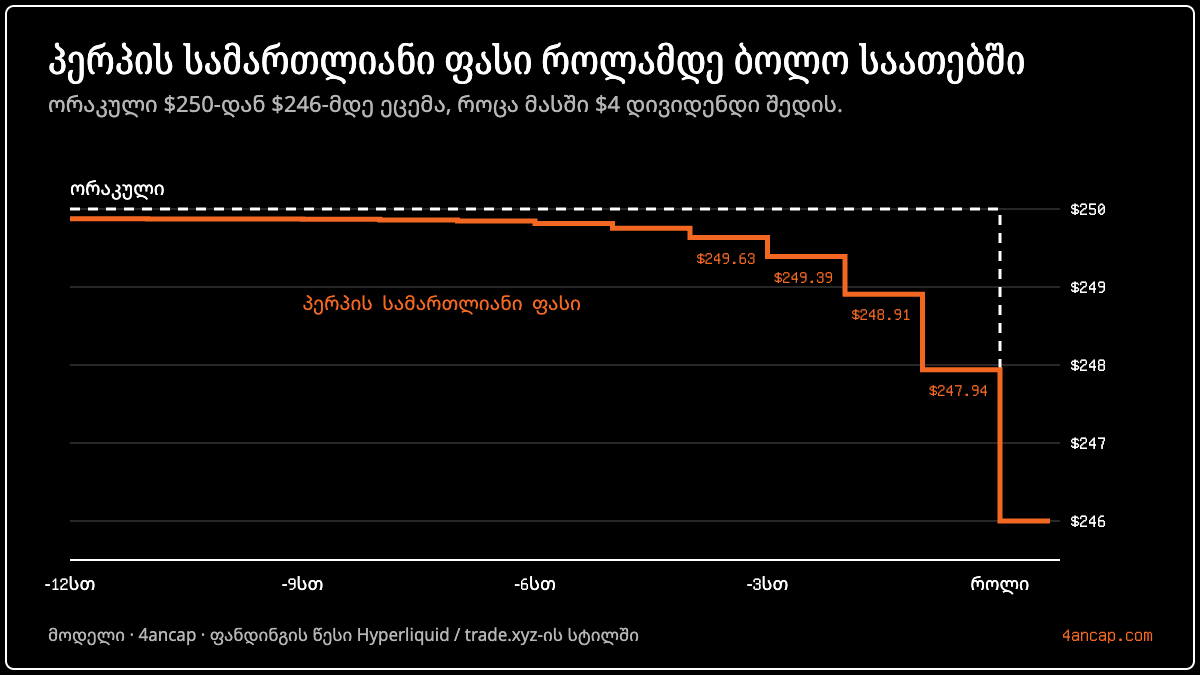
სხვაობა ყოველ საათს დაახლოებით ორჯერ მცირდება. როლიდან შორს ის 0.05%-იან პატარა ფასდაკლებაზე ჩერდება, სადაც ეს წესი ფანდინგს საერთოდ არ იხდის. იქ მოდელი სასარგებლოს აღარაფერს ამბობს, და რეალურ ფასს კაპიტალის ღირებულება და ჩვეულებრივი ვაჭრობა განსაზღვრავს.
რას ნიშნავს ეს ლონგებისა და შორტებისთვის
ამ გზაზე პერპი ორაკულს წინ უსწრებს და ეცემა, შორტები კი ლონგებს ყოველ საათს ფანდინგს უხდიან. ჯამში ლონგი ფანდინგის სახით დაახლოებით $4 დივიდენდს იღებს, ისევე როგორც აქციის მფლობელი. თუ პერპი მრუდზე ძვირად ვაჭრობს, შეგიძლიათ ის გაყიდოთ და შემდეგი კვარტალური ფიუჩერსი იყიდოთ: გადახდილი ფანდინგი იმ სხვაობაზე ნაკლები იქნება, რომელიც იხურება. თუ იაფად ვაჭრობს, პირიქით. ეს ორი გარიგება ფასს მრუდზე აჩერებს.
რას არ ითვალისწინებს მოდელი
- კაპიტალის ღირებულება. გარიგებაში ჩადებულ ფულს ფასი აქვს. ეს მრუდს გადაწევს, განსაკუთრებით როლიდან შორს.
- ბირჟის ზუსტი წესები. ფანდინგის ინტერვალი, ზღვრები და საპროცენტო წევრი ბირჟებზე განსხვავდება და დროთა განმავლობაში იცვლება. ვაჭრობამდე მიმდინარე დოკუმენტაცია შეამოწმეთ.
- ლიკვიდობა. როლის ახლოს თითქმის 1%-იანი საათობრივი ფანდინგი მოითხოვს, რომ ვინმე მეორე მხარეს დადგეს.
- ანგარიშები და სხვა ნახტომები. დივიდენდი წინასწარაა ცნობილი, ანგარიშების სიურპრიზი კი არა. როგორ უნდა მოეპყრას პერპი ცნობილ თარიღს უცნობი ზომის ნახტომით, ჯერ კიდევ ღია კითხვაა.
Perpetual futures (perps) started in crypto, where nothing pays a dividend. Now venues list perps on stocks and stock indexes, and that raises a plain question: when the stock pays out cash, who gets it? A perp never expires, so there is no settlement date to price the payout into. This dossier works through one answer, step by step, with a single made-up example.
The old answer: forwards already know
A dated forward or future on a stock is priced off the share, the interest rate and the dividends due before it expires. In textbook form, with spot price S, interest rate r, dividend yield q and time to expiry T:
F = S · e^((r − q) · T)
Take a $250 stock that pays a $4 dividend on day 30, and ignore interest. On day 30 the share drops by about $4. To a forward that expires after day 30, that drop is no surprise: it trades near $246 from the start. That is why buying puts before a dividend is not free money. The drop is already in the price.
A perp has no expiry, so it uses funding
A perp stays close to an oracle price through funding. Every hour, if the perp trades above the oracle, longs pay shorts a small share of their position; if it trades below, shorts pay longs. The payment makes the expensive side less attractive and pulls the price back.
Where the dividend hides in a stock perp
For crypto perps the oracle is simply a spot index. For stock perps, trade.xyz's specification builds the oracle from the nearest quarterly future and backs out a spot-like value:
oracle = F · e^(−(r − q) · T)
The quarterly future only contains dividends due before its own expiry. When the oracle rolls to the next quarterly contract, any dividend inside the new window enters it at once, and the oracle steps down. In our example the oracle sits at $250 and drops to $246 at the roll.
Working backwards from the roll
If the perp still traded at $250 one hour before the roll, a short could earn an almost certain $4 in the next hour. Traders would sell it down first. So what is the fair price at each hour before the roll?
Assume a funding rule in the style of Hyperliquid and trade.xyz: each hour the rate equals the premium p = (perp − oracle) / oracle, plus (0.01% − p) capped at ±0.05%. Ignore the cost of capital. A long who holds for one hour must break even: the price change plus the funding received comes to zero. Call this hour's premium y, and the premium expected one hour later d. Then:
y = (d − clamp(0.0001 − y, −0.0005, 0.0005)) / 2
which solves piece by piece:
| y = | when |
|---|---|
| d/2 − 0.00025 | d < −0.0003 |
| d − 0.0001 | −0.0003 ≤ d ≤ 0.0007 |
| d/2 + 0.00025 | d > 0.0007 |
Start at the roll, where the next price is $246 (d = −1.6%), and step back one hour at a time:
| Before the roll | Fair perp price | Gap to oracle |
|---|---|---|
| 1 hour | $247.94 | −0.83% |
| 2 hours | $248.91 | −0.44% |
| 3 hours | $249.39 | −0.24% |
| 4 hours | $249.63 | −0.15% |
| 6 hours | $249.81 | −0.07% |
| 12+ hours | $249.88 | −0.05% |
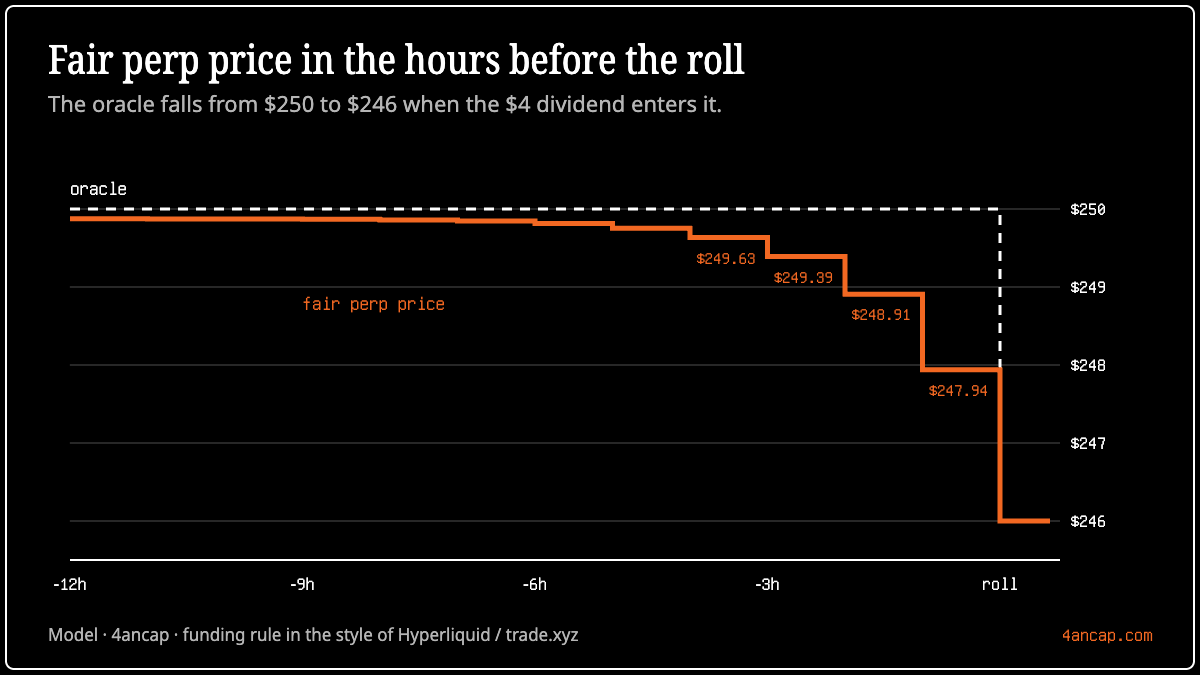
The gap roughly halves each hour. Far from the roll it settles at a small resting discount of 0.05%, where this funding rule pays nothing. There the model stops saying anything useful, and the real price is set by the cost of capital and ordinary trading.
What it means for longs and shorts
Along that path the perp drifts down ahead of the oracle, and shorts pay longs funding every hour. Add it up and the long collects roughly the $4 dividend through funding, the same as someone holding the share. If the perp trades above the curve, you can short it and buy the next quarterly future: the funding you pay is smaller than the gap that closes. If it trades below, do the opposite. Those two trades keep the price on the curve.
What the model leaves out
- Cost of capital. Money tied up in the trade costs something. That shifts the curve, mostly far from the roll.
- Exact venue rules. Funding intervals, caps and the interest term differ by venue and change over time. Check the current documentation before trading on this.
- Liquidity. Near the roll, hourly funding of almost 1% needs someone willing to take the other side.
- Earnings and other jumps. A dividend is known in advance; an earnings surprise is not. How a perp should treat a known date with an unknown size of jump is still an open question.
ეს სტატია არ არის ფინანსური რჩევა.This article is not financial advice.