



შენი სახელი ინტერნეტში: აქტივი, რომელსაც ვერ იყიდიYour name online: an asset you can't buy
ჩემი სახელი არ იცი. ჩემი სახე არასდროს გინახავს. ამ საიტზე ხედავ 4ancap-ს, პიქსელურ კომპიუტერს და ერთ წინადადებას: „ადამიანი, რომელიც ზედმეტად დიდ დროს ატარებს ინტერნეტში“. მაშ, რატომ უნდა დამიჯერო ერთი სიტყვაც შენს ფულზე?
ამის მხოლოდ ერთი მიზეზი შეიძლება არსებობდეს: რასაც აქ ვწერ, თარიღით რჩება. თუ ვცდები, რჩება. თუ რამეს მოგყიდი, ისიც რჩება. ეს არის ჩემი მთელი კაპიტალი აქ. და შენიც, იცი ეს თუ არა.
ეს სტატია ამ კაპიტალზეა: სახელზე, რომელიც ინტერნეტში გაქვს. უმეტესობა მას მეტსახელად თვლის. მე აქტივად ვთვლი. ნელა შენდება, დროთა განმავლობაში იზრდება, შეიძლება მოგპარონ და შეიძლება ერთ დღეში განულდეს. ზუსტად ფულივით.
ადრე „ვინ ხარ?“ პასპორტი პასუხობდა
ადრე ვინ იყავი, შენ მაგივრად წყდებოდა: სად დაიბადე, რა გვარი გქონდა, რა დიპლომი, რომელი ბანკი გიცნობდა, ვინ იცნობდა შენს ოჯახს. შენი რეპუტაცია ერთ ადგილას ცხოვრობდა და ყველა შენს ერთსა და იმავე ვერსიას იცნობდა.
ახლა ბანკი აპლიკაციაა. მაღაზია საიტია. ბირჟა ეკრანია. ბიბლიოთეკა საძიებო ველია. და ხალხი, რომელსაც შენთვის არასდროს უნახავს, წყვეტს, გენდოს თუ არა. შენს პასპორტს ვერ ამოწმებს. ამოწმებს იმას, რაც ინტერნეტში დატოვე.
ერთი ადამიანი, რამდენიმე სახელი
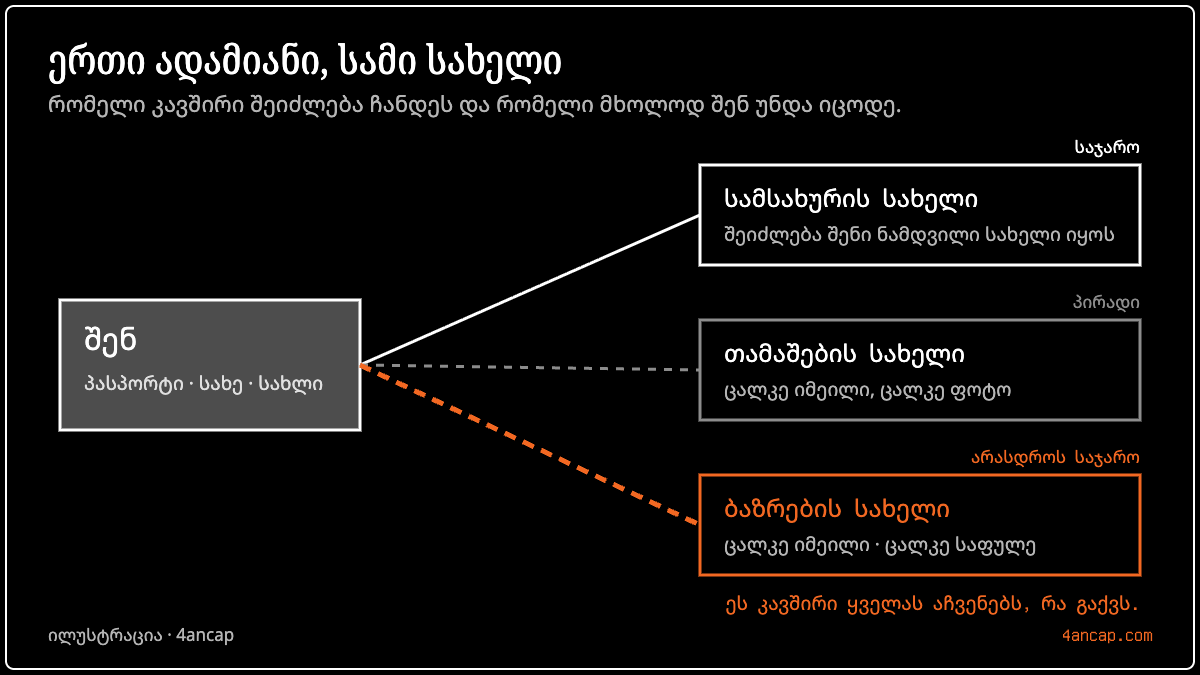
დღეს შეიძლება ერთი სახელი გქონდეს ბაზრებისთვის, მეორე თამაშებისთვის, მესამე სამსახურისთვის, და არცერთი არ იყოს მიბმული შენს პასპორტზე. ეს ტყუილი არ არის. ეს დაყოფაა. და როცა საქმე ფულს ეხება, ეს დაყოფა შენი დაცვაა.
აი რატომ. ბლოკჩეინი საჯაროა. ყველა ტრანზაქცია სამუდამოდ ჩანს. სანამ შენს მისამართს შენს სახელთან ვერავინ აკავშირებს, ის მხოლოდ ასოებისა და ციფრების წყებაა. როგორც კი ერთხელ მაინც დააკავშირებ (ბალანსის სქრინშოტი შენი ფოტოთი, ერთი და იგივე იმეილი, ENS-ის სახელი შენი გვარით), ნებისმიერს შეუძლია ნახოს, რამდენი გაქვს, როდის იყიდე და სად ინახავ. სამუდამოდ.
და ეს მხოლოდ ციფრული საფრთხე არ არის. 2025 წლის იანვარში საფრანგეთში აპარატურული საფულეების ერთ-ერთი კომპანიის თანადამფუძნებელი სახლიდან გაიტაცეს და გამოსასყიდს კრიპტოთი ითხოვდნენ. იმავე წელს მსგავსი თავდასხმები კიდევ მოხდა. რაც უფრო მეტმა ადამიანმა იცის შენი სახე და შენი საფულე ერთად, მით უფრო ძვირად შეიძლება დაგიჯდეს.
წესი მარტივია: შენი პასპორტი და შენი საფულე ერთ კადრში არასდროს. ბალანსის სქრინშოტს ნუ დებ. ბაზრების სახელს სხვა იმეილი და სხვა ფოტო აქვს. კავშირი, რომელიც შენს ნამდვილ სახელს შენს ფულთან აბამს, მხოლოდ შენს ხელში უნდა იყოს.
კოდი სახელს არ გეკითხება
ბიტქოინის ქსელი არ ამოწმებს, ვინ ხარ. ამოწმებს ხელმოწერას. თუ შენი გასაღებით მოაწერე, გადარიცხვა სრულდება. თუ არა, არ სრულდება. არც ბანკირი, არც მოსამართლე, არც ნაცნობობა. წესს კოდი აღასრულებს, და კოდისთვის შენს სახეს მნიშვნელობა არ აქვს.
ამიტომ ისტორიაში პირველად სახელს სახის გარეშე შეუძლია ნამდვილი კაპიტალი და ძალა ჰქონდეს. სატოში ნაკამოტომ ბიტქოინის აღწერა 2008 წელს გამოაქვეყნა სახელით, რომელსაც დღემდე ვერავინ დაუკავშირა ცოცხალ ადამიანს. მონეტები, რომლებსაც მას მიაწერენ, ჩვეული შეფასებით დაახლოებით მილიონი ბიტქოინი, დღემდე არ განძრეულა. ქსელი კი მის გარეშე მუშაობს. ბიტქოინს არ სჭირდება იცოდეს, ვინ არის სატოში. სჭირდება, რომ წესები მოქმედებდეს.
მაგრამ მედალს მეორე მხარეც აქვს. ანონიმური გუნდები ტოკენს უშვებენ, ფულს აგროვებენ და ქრებიან. ანონიმურობა თავისთავად არც კარგია, არც ცუდი. მნიშვნელობა ისტორიას აქვს. ანონს, რომელიც წლებია ღიად წერს და რომლის ყველა სიტყვა თარიღით ჩანს, შეიძლება მეტად ენდო, ვიდრე კოსტიუმიან „დირექტორს“ ახალი ექაუნთით. ანონიმურ გუნდს კი, რომელსაც ისტორია არ აქვს და შენს ფულს ითხოვს, ფულს არ მიანდობ. ეს გემბლინგია.
კოსტიუმი ინტერნეტში არაფერს ნიშნავს
დიპლომი ბიოში, ფოტო კოსტიუმში, „CEO“ სახელის გვერდით. ინტერნეტში ამის გაყალბება არაფერი ღირს. მიმდევრების ყიდვა იაფია. სახისა და ხმის გაყალბებაც უკვე იაფია. ამიტომ ნებისმიერ ნიშანს ერთი კითხვით ვამოწმებ: რა ჯდება მისი გაყალბება?
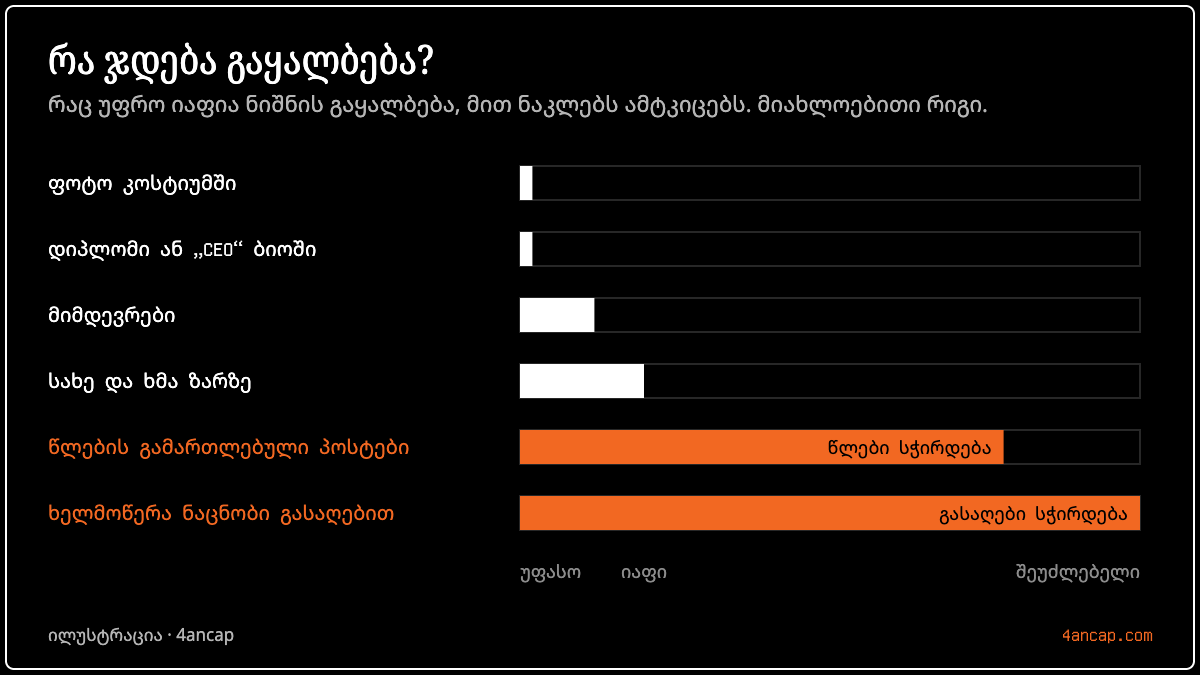
რისი გაყალბებაც ძვირია, ის არის ნამდვილი სტატუსი. და ის თავის სფეროში შენდება, იქვე, ინტერნეტში: კრიპტოში, თამაშებში, ბაზრების განხილვაში. აზრი, რომელიც წლების წინ თარიღით დაწერე და გამართლდა. კოდი, რომელიც მუშაობს და რომლის ნახვაც ყველას შეუძლია. ექაუნთი, რომელიც ხუთი წელია ერთსა და იმავეს ამბობს და ქარის მიხედვით მხარეს არ იცვლის. ასეთ სტატუსს ბიოში ვერ ჩაწერ. მხოლოდ დააგროვებ.
სახე აღარ არის მტკიცებულება
2024 წელს ჰონკონგში ერთი საერთაშორისო კომპანიის თანამშრომელმა დაახლოებით 25 მილიონი დოლარი გადარიცხა ვიდეოზარის მერე, რომელზეც „ფინანსური დირექტორი“ და „კოლეგები“ ისხდნენ. ყველა მათგანი დიპფეიკი იყო. ხმის გასაყალბებლად დღეს რამდენიმეწამიანი ჩანაწერიც საკმარისია.
ესე იგი 2026 წელს სახე და ხმა აღარ ამტკიცებს, ვინ ხარ. რა ამტკიცებს? ხელმოწერა იმ გასაღებით, რომელსაც უკვე იცნობ. ბიტქოინის ან Ethereum-ის მისამართს შეუძლია ნებისმიერ ტექსტს მოაწეროს ხელი, და ნებისმიერს შეუძლია შეამოწმოს, რომ ხელმოწერა სწორედ ამ მისამართის გასაღებითაა გაკეთებული. გასაღების გარეშე ამის გაყალბება შეუძლებელია. ფოტოზე ამას ვერ იტყვი.
შენთვის ეს სამ რამეს ნიშნავს:
- ვინც პირველი გწერს და მოგებას გთავაზობს, ის შენი მეგობარი არ არის, რა სახეც არ უნდა ეკეთოს.
- ოჯახთან შეთანხმდი ერთ სიტყვაზე, რომელიც მხოლოდ შენ და შენმა ოჯახმა იცის. თუ „დედა“ ან „ძმა“ გირეკავს და ფულს გთხოვს, ჯერ ის სიტყვა ჰკითხე.
- თუ ვინმე ამბობს, რომ ეს მისამართი მისია, სთხოვე, ამ მისამართით მოაწეროს ხელი. სიტყვას ნუ ენდობი. ხელმოწერას ენდე.
ნაყიდი სტატუსი და მოპოვებული სტატუსი
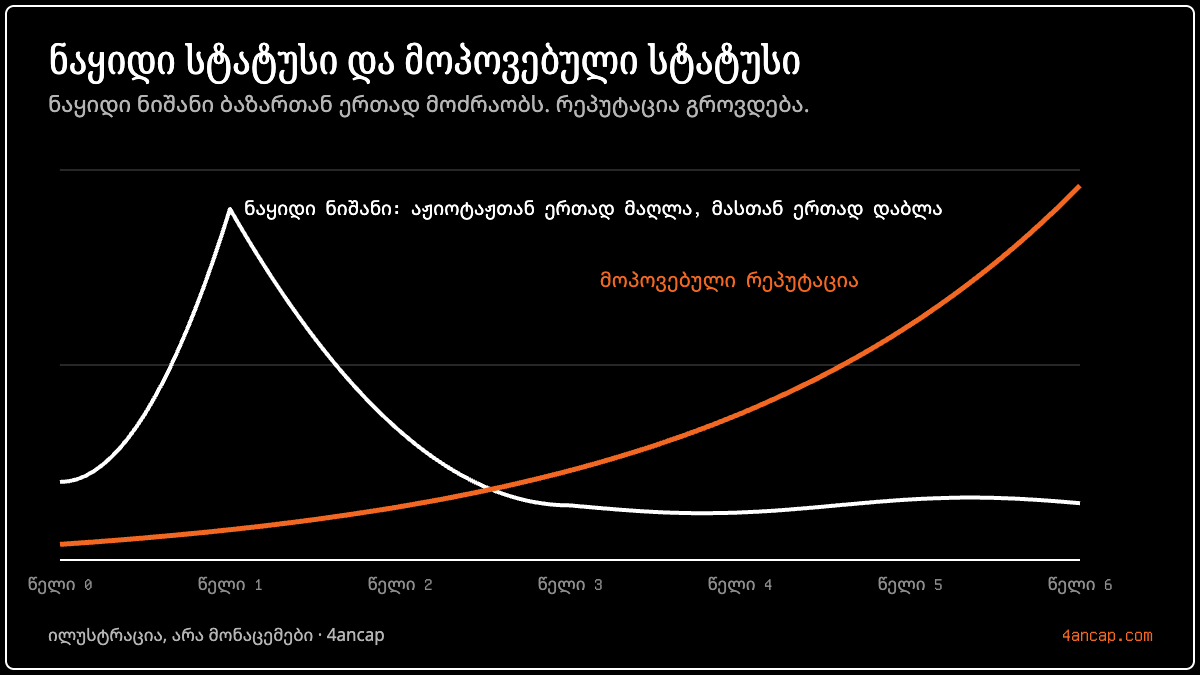
ანონიმური ექაუნთი ვერ დაიკვეხნის მანქანით ან საათით. ამიტომ ინტერნეტმა თავისი ფუფუნების ნივთები შექმნა. მოკლე, იშვიათი სახელები: Telegram მათ აუქციონზე კრიპტოთი ყიდის. თამაშის სკინები, რომელთაგან ზოგი მანქანაზე ძვირი ღირს. NFT-ები: CryptoPunks, 10 000 პიქსელური სახე 2017 წლიდან, რომელთაგან ზოგიერთი მილიონ დოლარად და მეტად გაიყიდა. ავატარად დასმული პანკი იგივეა, რაც მაჯაზე ძვირი საათი: „დიდი ხანია აქ ვარ და ფული მაქვს“.
ამაში ცუდი არაფერია. ოღონდ ერთმანეთში ნუ აურევ. ფუფუნების ნივთი ფასია, ფასი კი ეცემა. 2021 წლის აჟიოტაჟში ნაყიდი NFT-ების უმეტესობა დღეს გადახდილის მცირე ნაწილი ღირს, ბევრი კი ნული. ნიშანს ნებისმიერი იყიდის, ვისაც ფული აქვს, თაღლითიც. რეპუტაციას ვერავინ იყიდის.
თუ იშვიათი სახელი ან NFT გინდა, იყიდე. მაგრამ ზუსტად ისე, როგორც ნებისმიერი სარისკო აქტივი: მხოლოდ იმ ფულით, რომლის დაკარგვაც შეგიძლია. სტატუსის ყიდვა სესხით ან ლევერიჯით იგივე გემბლინგია, ოღონდ უფრო სასაცილო.
როგორ ნულდება სახელი
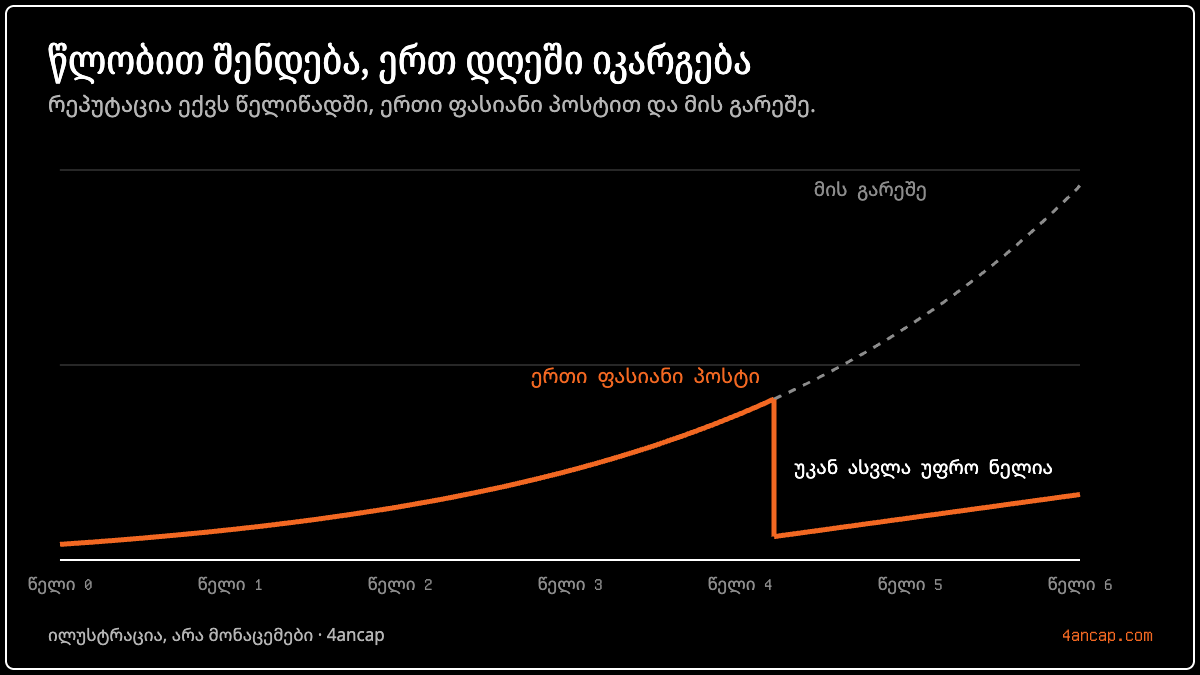
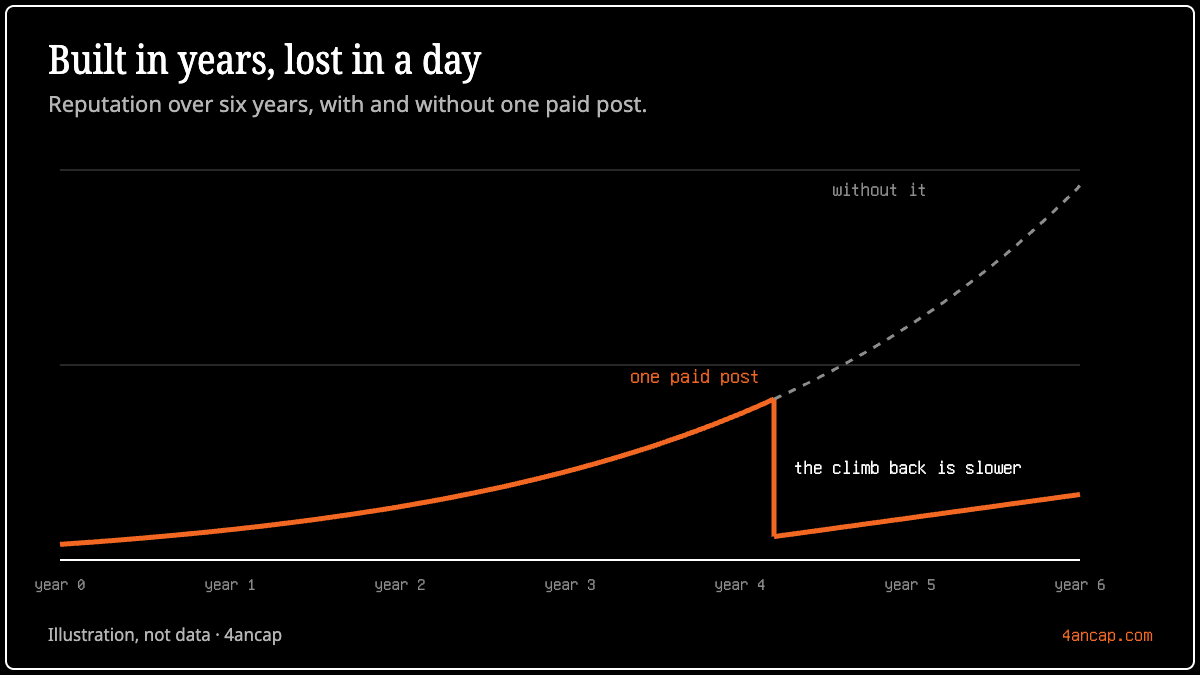
რეპუტაცია ფულივით გროვდება, ერთი განსხვავებით: ზარალი გაცილებით სწრაფია. რასაც წლობით აშენებ, ერთ დღეში კარგავ. აღდგენა კი ბევრად უფრო რთულია, ვიდრე −50%-ის მერე +100%.
ოთხი გზა, რომლითაც ეს ხდება:
- გაყიდი. „ამ ტოკენზე ერთი პოსტი დადე, $2,000-ს გადაგიხდით“. ერთი ფასიანი პოსტი იმაზე, რასაც თავად არ იყიდდი, წლების ნდობას წვავს. ხალხს ახსოვს, ვინ აქებდა მონეტას, რომელიც მერე ნულზე ჩამოვიდა.
- მოგპარავენ. 2024 წლის იანვარში აშშ-ის ფასიანი ქაღალდების კომისიის (SEC) X-ის ექაუნთი SIM-ბარათის გადაფორმებით აიღეს და ყალბი ამბავი დაპოსტეს, თითქოს ბიტქოინის ETF-ები დაამტკიცეს. ფასი ავიდა და მაშინვე დაეცა. თუ SEC-ს დაემართა, შენც დაგემართება. SMS-ით შესვლის დადასტურება არა: აპლიკაცია ან აპარატურული გასაღები.
- დაკარგავ. თუ შენი სახელი მისამართზეა მიბმული და სიდ-ფრაზა დაკარგე, სახელიც დაკარგე. ვერავის დაურეკავ. ვერავინ აღგიდგენს.
- მოიტყუები. მხოლოდ მოგებების სქრინშოტები, ზარალისა არასდროს. ადრე თუ გვიან ვიღაც დათვლის. თარიღიანი ჩანაწერი ორივე მხარეს მუშაობს.
დაიწყე დღეს
დრო ერთადერთია, რასაც ვერავინ გააყალბებს. ვინც დღეს დაიწყებს, ხუთ წელიწადში ხუთწლიანი ისტორია ექნება. ვინც ხუთ წელიწადში დაიწყებს, არაფერი. ტალღა უკვე მოდის: ფული, სამსახური და ნდობა სულ უფრო მეტად ინტერნეტში გადადის. ვისაც იქ საკუთარი სახელი ექნება, ის ტალღას დაიჭერს. დანარჩენები სხვის სახელებს მიენდობიან.
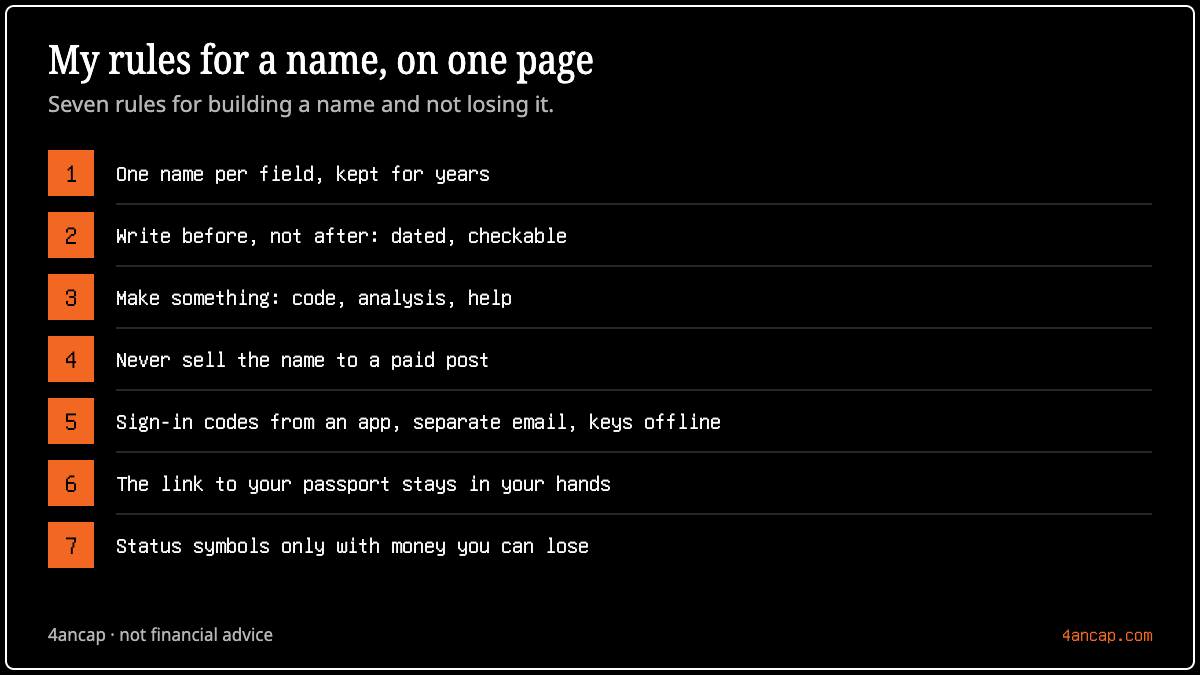
ოღონდ ააშენე ინვესტორივით, და არა მოთამაშესავით:
- თითო სფეროს თავისი სახელი, წლობით. ნუ იცვლი.
- დაწერე წინასწარ, და არა მერე: შენი აზრი თარიღით, რომ შემოწმება შეიძლებოდეს.
- გააკეთე რამე: კოდი, ანალიზი, დახმარება საზოგადოებაში. სტატუსს საქმე აშენებს, ყვირილი არა.
- სახელს არ ყიდი: არაფერს აქებ, რასაც თავად არ იყიდდი.
- დაიცავი საფულესავით: შესვლის დადასტურება აპლიკაციით, ცალკე იმეილი, გასაღებები ინტერნეტის გარეშე.
- კავშირი სახელსა და პასპორტს შორის მხოლოდ შენს ხელშია.
- სტატუსის ნიშნებს მხოლოდ იმ ფულით ყიდულობ, რომლის დაკარგვაც შეგიძლია.
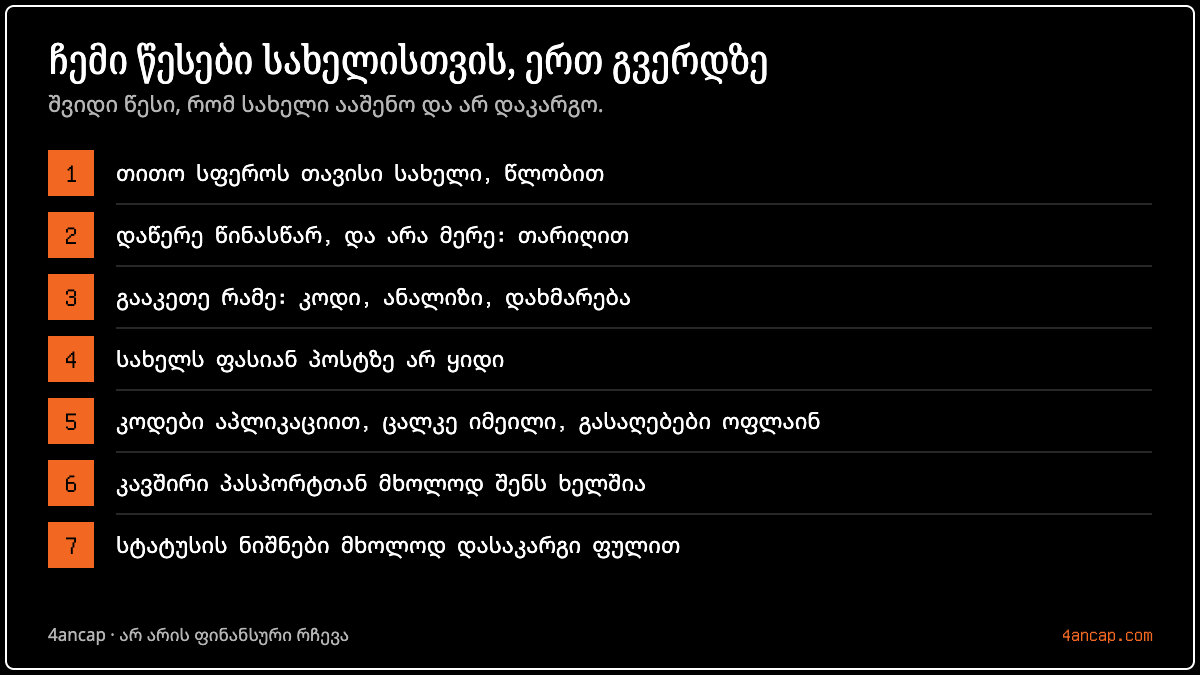
მე 4ancap-ად ვწერ, და ამ საიტს ჩემი სახე არ სჭირდება. სჭირდება ის, რომ ყველა სიტყვა აქ დარჩეს, თარიღით, და წლების მერეც გაუძლოს. შენი სახელი ინტერნეტში შენი პირველი აქტივია. მასზეც ნუ გაღარიბდები.
You don't know my name. You've never seen my face. On this site you see 4ancap, a pixel computer and one line: "Someone who spends far too much time on the internet." So why would you believe a single word I write about your money?
Only one reason can hold: what I write here stays, with a date on it. If I'm wrong, it stays. If I sell you something, that stays too. That's my entire capital here. And it's yours too, whether you know it or not.
This article is about that capital: the name you have online. Most people treat it as a nickname. I treat it as an asset. It's built slowly, it compounds, it can be stolen, and it can go to zero in a day. Exactly like money.
"Who are you?" used to be your passport's job
Who you were used to be decided for you: where you were born, your surname, your diploma, the bank that knew you, who knew your family. Your reputation lived in one place, and everyone knew the same version of you.
Now the bank is an app. The shop is a website. The exchange is a screen. The library is a search box. And people who have never seen you decide whether to trust you. They can't check your passport. They check what you've left online.
One person, several names
Today you can have one name for markets, another for games, a third for work, and none of them tied to your passport. That isn't lying. It's separation. And where money is involved, that separation is your protection.
Here's why. A blockchain is public. Every transaction is visible forever. As long as nobody can link your address to your name, it's just a string of letters and numbers. The moment you link them even once (a balance screenshot with your photo, the same email, an ENS name with your surname), anyone can see how much you hold, when you bought and where you keep it. Forever.
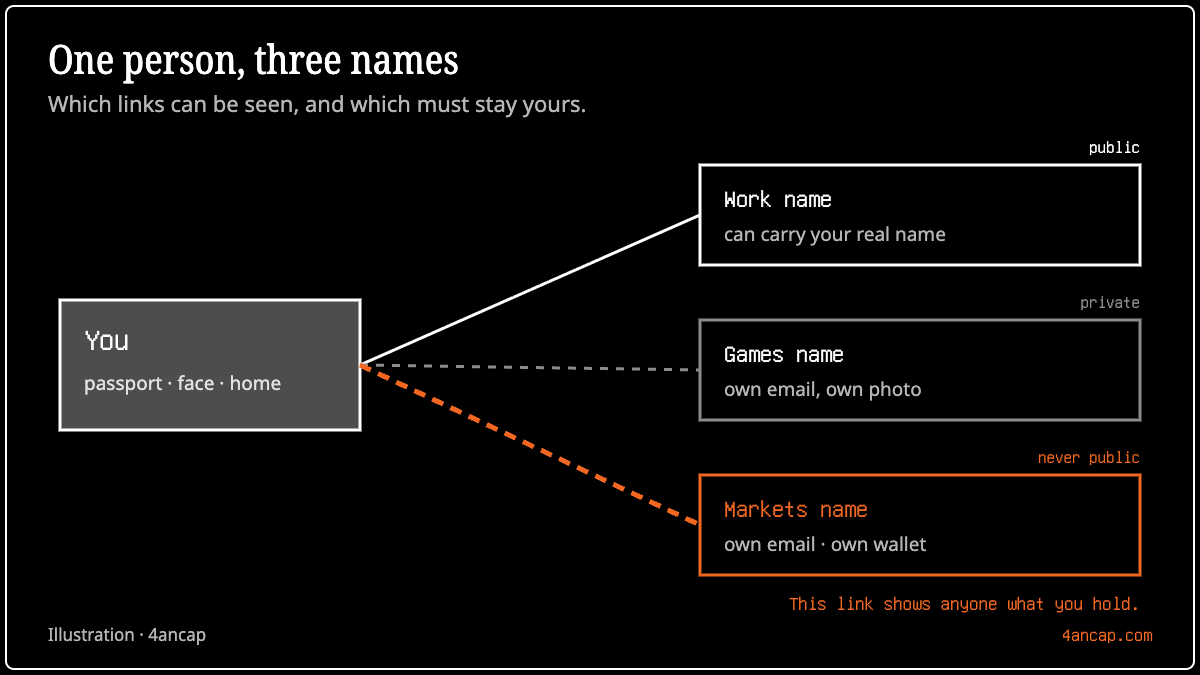
And the danger isn't only digital. In January 2025 in France, a co-founder of a hardware-wallet company was kidnapped from his home, and the kidnappers demanded a ransom in crypto. More attacks like it followed the same year. The more people know your face and your wallet together, the more it can cost you.
The rule is simple: your passport and your wallet never in the same picture. Don't post balance screenshots. Your markets name gets its own email and its own photo. The link between your real name and your money stays in your hands only.
Code doesn't ask your name
The bitcoin network doesn't check who you are. It checks the signature. Sign with your key and the transfer goes through. Don't, and it doesn't. No banker, no judge, no connections. Code enforces the rule, and to code your face means nothing.
That's why, for the first time in history, a name without a face can hold real capital and real power. Satoshi Nakamoto published the description of bitcoin in 2008 under a name nobody has ever tied to a living person. The coins attributed to Satoshi, about a million bitcoin by the usual estimate, have never moved. And the network runs without them. Bitcoin doesn't need to know who Satoshi is. It needs the rules to hold.
But there's another side. Anonymous teams launch a token, collect the money and vanish. Anonymity on its own is neither good nor bad. What matters is the record. An anon who has written in the open for years, every word dated, can deserve more trust than a "CEO" in a suit with a brand-new account. An anonymous team with no record asking for your money doesn't get your money. That's gambling.
A suit means nothing online
A diploma in the bio, a photo in a suit, "CEO" next to the name. Online, faking that costs nothing. Followers are cheap to buy. Faces and voices are cheap to fake now too. So I test every sign with one question: what does it cost to fake?
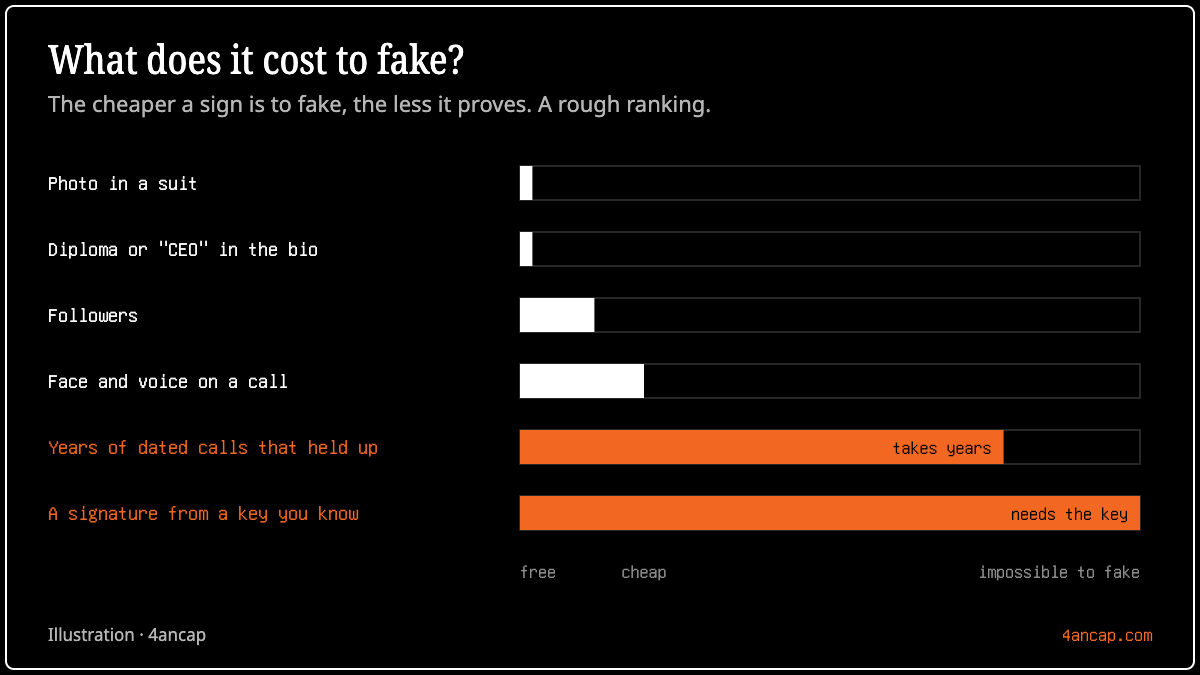
Whatever is expensive to fake is real status. And it's built inside its own field, right there online: in crypto, in games, in market discourse. A view you wrote down with a date years ago that turned out right. Code that runs, where anyone can see it. An account that has said the same thing for five years and doesn't switch sides with the wind. You can't write that kind of status into a bio. You can only accumulate it.
A face is no longer proof
In 2024 in Hong Kong, an employee of an international firm transferred about $25 million after a video call with the "chief financial officer" and "colleagues". Every one of them was a deepfake. Today a few seconds of recording is enough to clone a voice.
So in 2026 a face and a voice no longer prove who you are. What does? A signature from a key you already know. A bitcoin or Ethereum address can sign any text, and anyone can check that the signature was made with that address's key. Without the key, it can't be faked. You can't say that about a photo.
For you, that means three things:
- Whoever messages you first offering returns is not your friend, whatever face they're wearing.
- Agree on one word with your family that only you and they know. If "mum" or "your brother" calls asking for money, ask for the word first.
- If someone says an address is theirs, ask them to sign with it. Don't trust the words. Trust the signature.
Bought status and earned status
An anonymous account can't show off a car or a watch. So the internet made its own luxury goods. Short, rare usernames: Telegram sells them at auction for crypto. Game skins, some of them pricier than a car. NFTs: CryptoPunks, 10,000 pixel faces from 2017, some of which sold for a million dollars and more. A punk set as your avatar is the same as an expensive watch on your wrist: "I've been here a long time, and I have money."
Nothing wrong with that. Just don't mix the two up. A luxury good is a price, and prices fall. Most NFTs bought in the 2021 frenzy are worth a small part of what was paid today, and many are worth nothing. Anyone with money can buy a symbol, including a scammer. Nobody can buy a reputation.
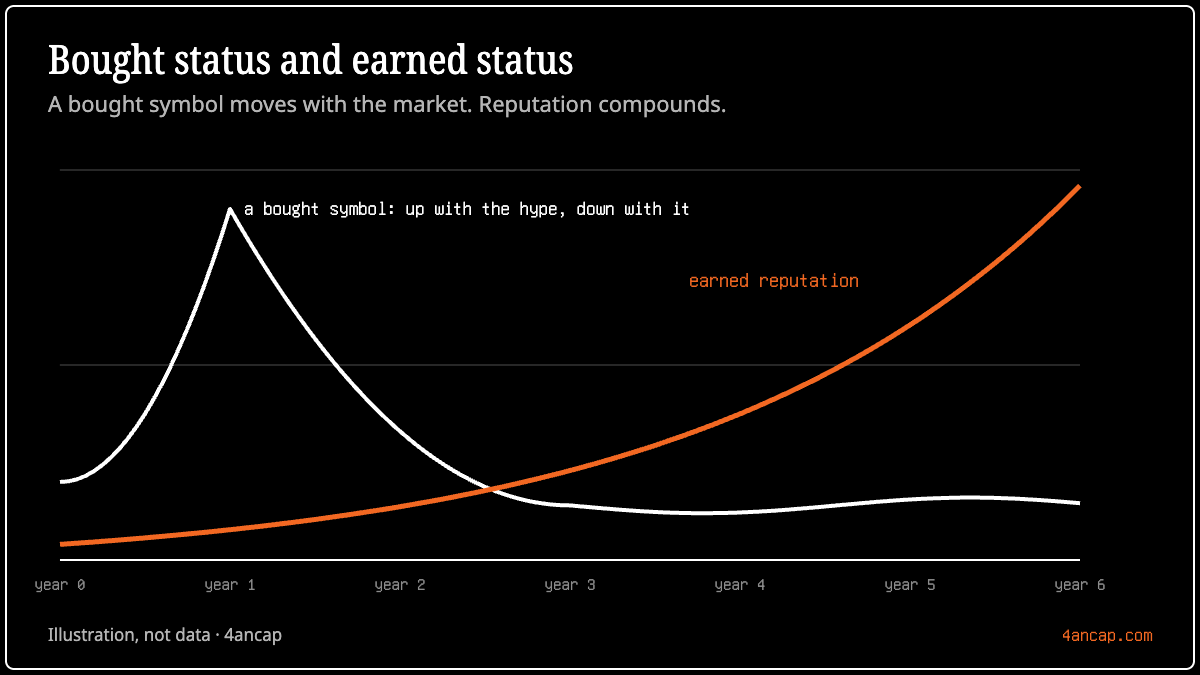
If you want a rare name or an NFT, buy one. But exactly the way you'd buy any risky asset: only with money you can afford to lose. Buying status on credit or with leverage is the same gambling, just sillier.
How a name goes to zero
Reputation compounds like money, with one difference: losses are much faster. What you build over years, you lose in a day. And getting it back is far harder than +100% after −50%.
Four ways it happens:
- You sell it. "Post once about this token, we'll pay you $2,000." One paid post about something you wouldn't buy yourself burns years of trust. People remember who was praising the coin that later went to zero.
- It gets stolen. In January 2024 the X account of the US Securities and Exchange Commission (SEC) was taken over with a SIM swap, and someone posted fake news that bitcoin ETFs had been approved. The price jumped and fell right back. If it happened to the SEC, it can happen to you. No SMS codes for signing in: use an app or a hardware key.
- You lose it. If your name is tied to an address and you lose the seed phrase, you've lost the name too. There's nobody to call. Nobody can restore it.
- You lie. Only screenshots of the wins, never of the losses. Sooner or later someone does the maths. A dated record cuts both ways.
Start today
Time is the one thing nobody can fake. Whoever starts today will have five years of record in five years. Whoever starts in five years will have nothing. The wave is already here: money, work and trust keep moving online. Those who have a name of their own there will ride it. Everyone else will be trusting other people's names.
Just build it like an investor, not like a gambler:
- One name per field, for years. Don't keep changing it.
- Write before, not after: your view, dated, so it can be checked.
- Make something: code, analysis, help in a community. Work builds status, shouting doesn't.
- Never sell the name: don't praise anything you wouldn't buy yourself.
- Guard it like a wallet: sign-in codes from an app, a separate email, keys offline.
- The link between your name and your passport stays in your hands only.
- Buy status symbols only with money you can afford to lose.
I write as 4ancap, and this site doesn't need my face. What it needs is for every word to stay here, dated, and still stand years from now. Your name online is your first asset. Don't go broke on that one either.
ეს სტატია არ არის ფინანსური რჩევა.This article is not financial advice.